
Recently, Alistair Begg posted a great tribute to John MacArthur after his passing. As I scrolled through the comments, I saw someone call Alistair Begg “compromised and no longer a follower of Christ,” I assume because he said Christians should attend gay weddings a year-and-a-half ago.
The truth is, Moni isn’t the only person who thinks this way. Was Alistair wrong about if Christians should attend gay weddings? Yes. It is never loving to affirm sin in attempt to appear loving to the world. Ephesians 5:11 says: “Take no part in the unfruitful works of darkness, but instead expose them.” A lot more could be (and has been) said on that.
But does that mean Begg is no longer a follower of Christ?
Al Mohler in his 2005 blog post titled A Call for Theological Triage and Christian Maturity proposed three different levels of theological urgency that I find helpful1.
“First-level theological issues would include those doctrines most central and essential to the Christian faith. Included among these most crucial doctrines would be doctrines such as the Trinity, the full deity and humanity of Jesus Christ, justification by faith, and the authority of Scripture… These first-order doctrines represent the most fundamental truths of the Christian faith, and a denial of these doctrines represents nothing less than an eventual denial of Christianity itself.”
Did Alistair Begg deny the Trinity, the full deity and humanity of Jesus Christ, justification by faith, and the authority of Scripture? Unless I missed something, I don’t believe he did. Therefore we should not be making serious claims saying he is no longer following Christ unless he has shown us that he does not hold to these first-level theological issues.
Mohler goes on to describe second- and third-order doctrines:
“The set of second-order doctrines is distinguished from the first-order set by the fact that believing Christians may disagree on the second-order issues, though this disagreement will create significant boundaries between believers… Second-order issues would include the meaning and mode of baptism.”
“Third-order issues are doctrines over which Christians may disagree and remain in close fellowship, even within local congregations. I would put most of the debates over eschatology, for example, in this category.”
So the question is this – What level issue is “should a Christian attend a gay wedding?”
It is certainly not first-order. Good news, Alistair Begg is still a Christian!
Is it second-order? Although it may be awkward, Christians can disagree on this and not break fellowship. They can still baptize their babies (or not), they can still sing praises to our Triune God, they can still sit under the preaching of the Word, they can still take the Lord’s Supper, and they can still glory in the wonders of the Gospel together.
This issue is a third-order issue. Like eschatology, we may disagree significantly from one another and each one of us should be fully convinced in our own mind (Romans 14:5) of what we believe is true, but we should not call into question each other’s salvation because you are a jolly postmillenialist and I’m a slightly less optimistic amillenialist. We should not call into question Begg’s salvation based on his (I believe) erroneous handling of this situation.
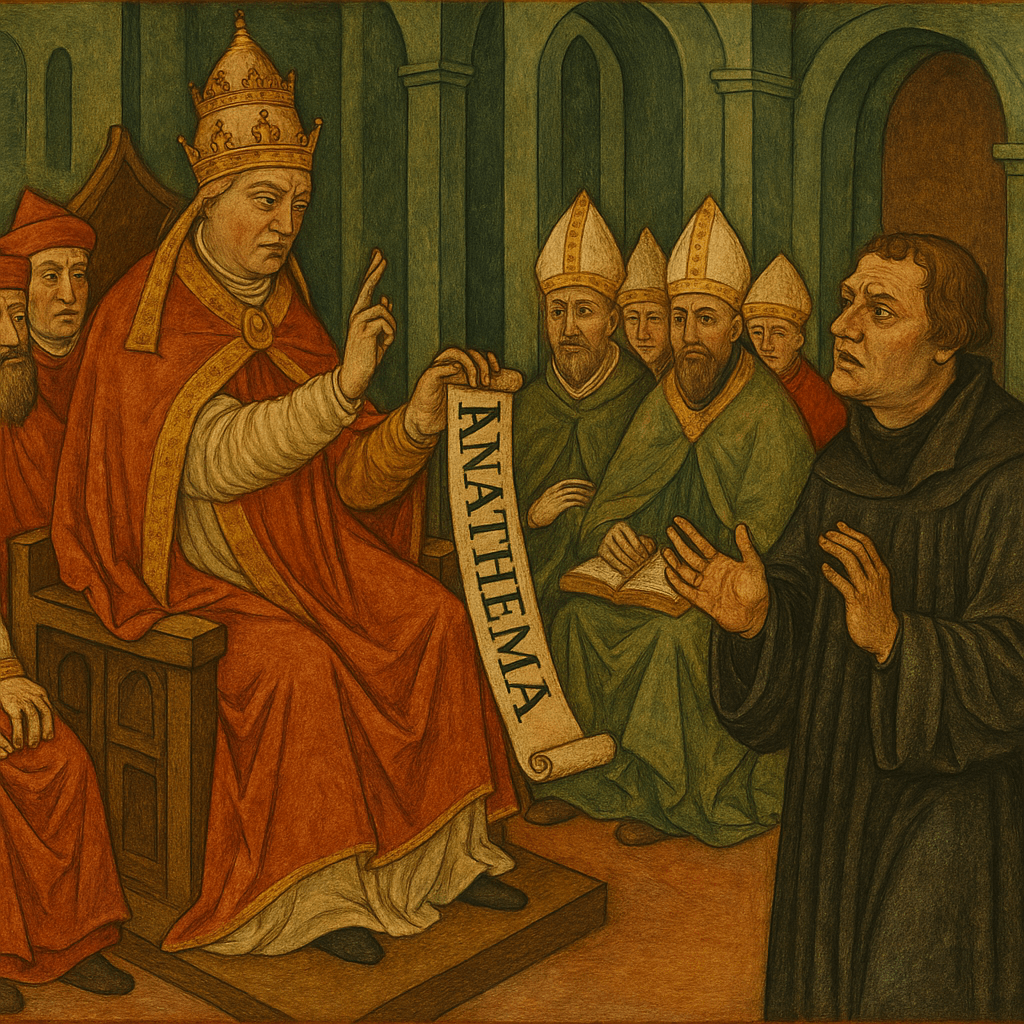
There are errors that are not heresy. There are errors that are not damnable. Should they be addressed? Absolutely. Will those who err realize their error and repent? Not always. Should we call Christians that disagree with us on third-order issues anathema? Absolutely not.
Galatians 1:8-9
8 But even if we or an angel from heaven should preach to you a gospel contrary to the one we preached to you, let him be accursed. 9 As we have said before, so now I say again: If anyone is preaching to you a gospel contrary to the one you received, let him be accursed.
Titus 3:9-11
9 But avoid foolish controversies, genealogies, dissensions, and quarrels about the law, for they are unprofitable and worthless. 10 As for a person who stirs up division, after warning him once and then twice, have nothing more to do with him, 11 knowing that such a person is warped and sinful; he is self-condemned.
- For a more detailed breakdown of fundamental doctrines, see Mike Riccardi’s article When Does Error Become Heresy? ↩︎

Leave a comment